Namefall is a third-person action RPG currently in development at ThunderForge, a studio I co-founded and lead alongside a team of six. Inspired by the souls-like genre, the game is being built around punishing but fair combat, deliberate stamina management, interconnected level design, and high-stakes exploration where every encounter matters. Beyond these foundations, Namefall introduces its own twists to both gameplay and narrative, offering players something familiar yet unexpected within a genre known for rewarding mastery and discovery. The following sections explore part of the first area of the game, Hollow Keep, and the level design process behind the game, from early block outs and spatial planning to the design decisions that shape how players navigate and experience each area. The environment design and assembly are also my own work, using existing assets to build the space, set the lighting, and establish the atmosphere.
Developer(s): ThunderForge Ltd
Role: Co-Founder, Creative Director, Game Designer, Level Designer
Engine: Unreal Engine 5
Programming Tools: Blueprints, C++
Platform(s): PC, PS5, PS4
Release: In Development (Currently 2028)
Genre(s): Third-Person Action RPG / Souls-like
Mode(s): Single Player
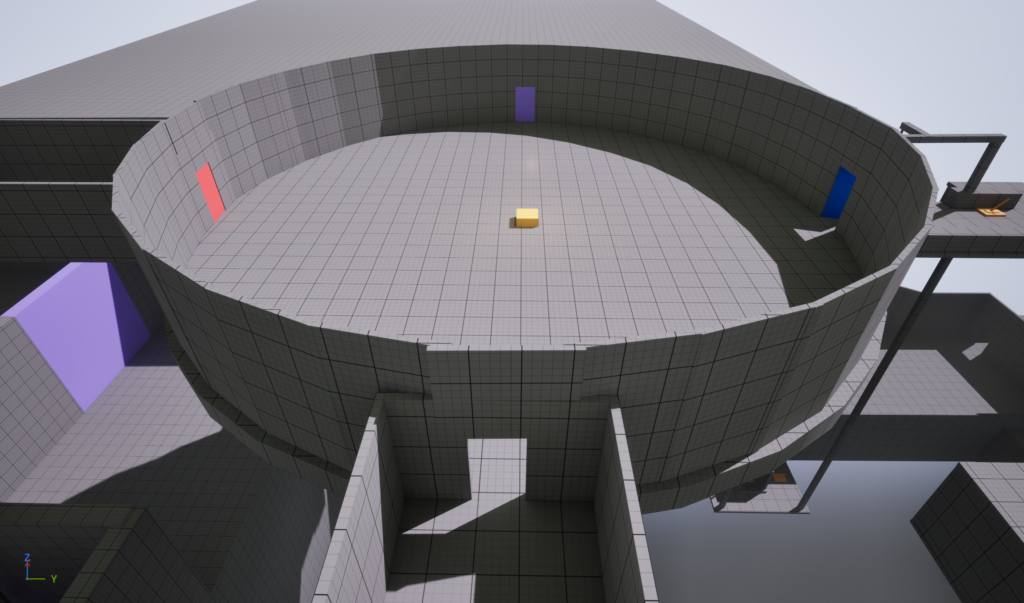
Establishing direction at spawn
The first room features three doors and a central bonfire, the player’s first checkpoint. Two of the doors are locked: the purple one requires a key item earned from a boss encounter, and the red one is a shortcut that can only be opened from the opposite side. While the presence of multiple doors creates a sense of possibility and anticipation, the player’s path forward is deliberately funnelled to a single option, the blue door. This avoids overwhelming them at the start while still planting curiosity about what lies behind the locked routes.
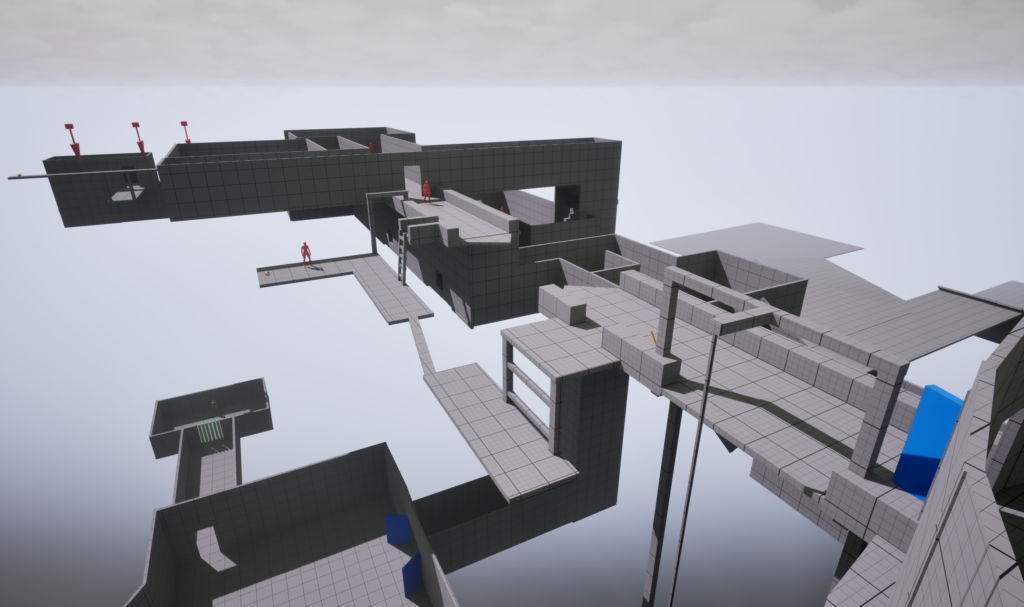
Controlled pacing through first linear enemy encounter
Beyond the only unlocked door, the player enters a linear broken bridge section designed to keep their focus forward. A lever is visible but unusable from this side, hinting at a future shortcut back to the bonfire via an elevator. The first enemy encounter takes place on the edge of a wooden plank, guarding a simple item. The confined space limits both the player’s and the enemy’s movement, creating a manageable but meaningful challenge. The encounter is tuned to be fair without being forgiving, establishing early on that the game expects the player to engage rather than pass through unchallenged.
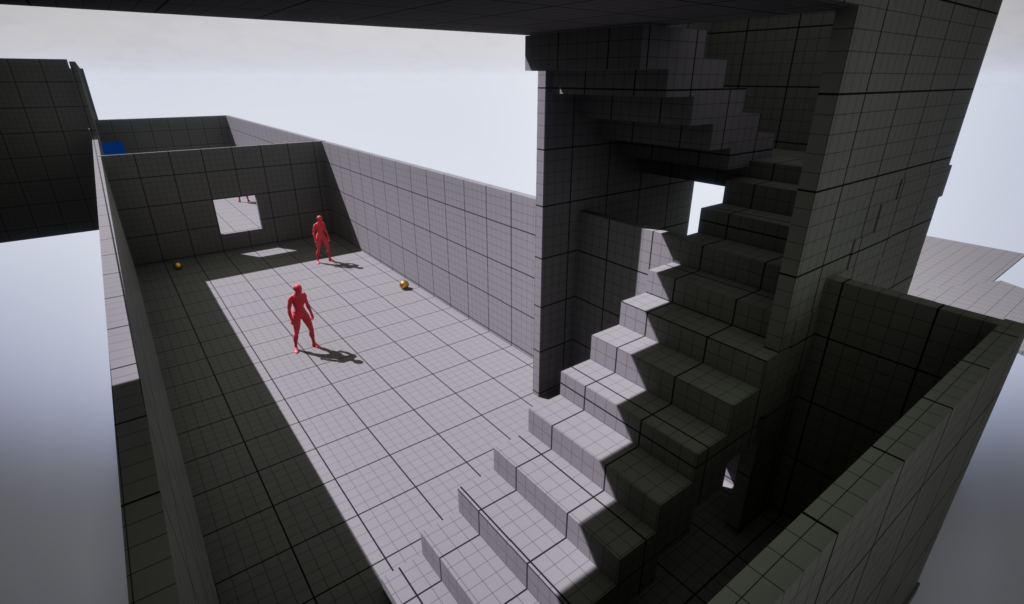
Rewarding exploration off the critical path
Inside the main castle structure, a corridor to the right leads down a set of stairs to an optional room. It contains a couple of enemies guarding a few items, rewarding players who choose to explore off the main path while reinforcing the lesson that loot in this world is rarely unguarded. A window in the room offers a glimpse into an area the player will reach later through natural progression. This serves as an additional reward beyond the immediate loot, giving the player a visual promise of what lies ahead and motivating further exploration.
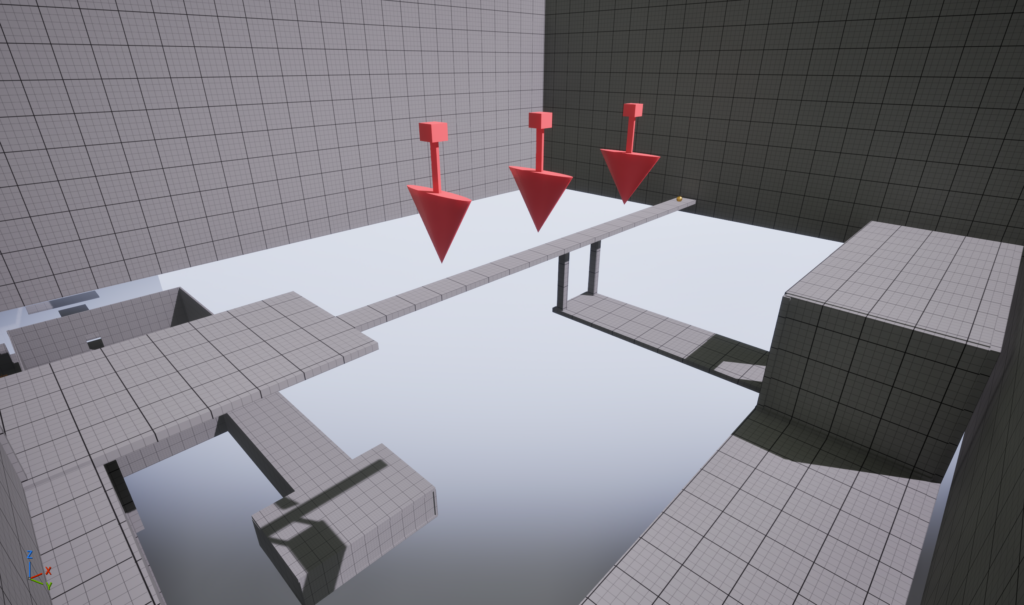
Using environmental hazards to build tension
This is the first room where the player encounters moving traps. The swinging axes are straightforward to avoid but inject tension into what would otherwise be simple traversal. Unlike enemies, which can be outrun or bypassed, a mandatory trap section demands the player’s full attention, with the added pressure that death means respawning from the last bonfire. Only the first two axes are required to progress and drop down to the ledge below. A third guards an item at the end of the platform, giving observant players a reason to take the extra risk.
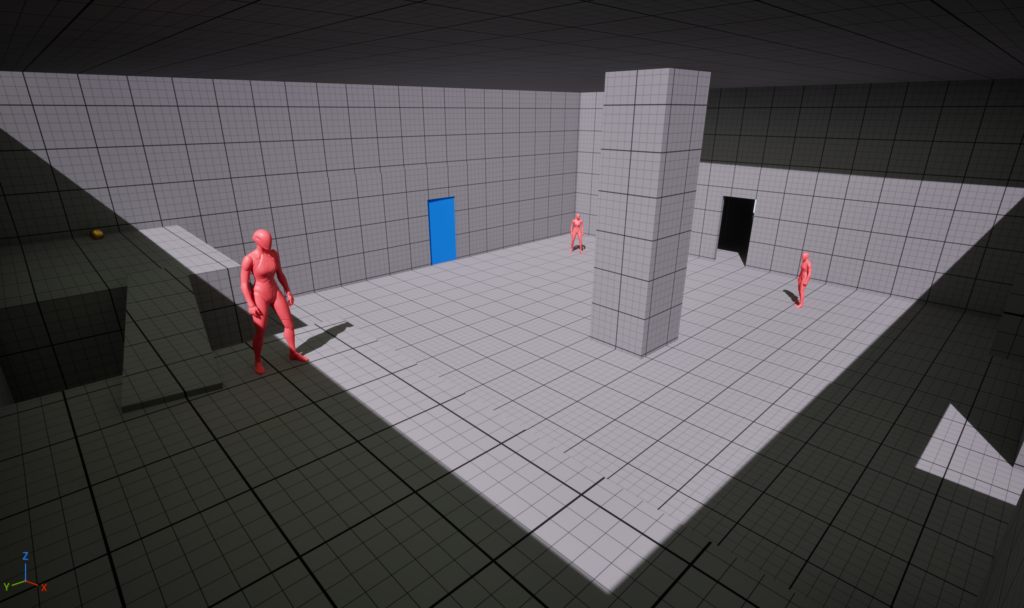
Scaling combat intensity with group encounters
After the trap section, the player reaches a room with three enemies. On entry, two melee enemies approach immediately while a new enemy type, a ranged archer, attacks from an elevated ledge above. The encounter is designed to teach the player to manage multiple threat types simultaneously, dealing with close-range pressure while staying aware of incoming projectiles. A large central pillar provides cover from the arrows, rewarding players who read their environment and use the space tactically rather than fighting carelessly.
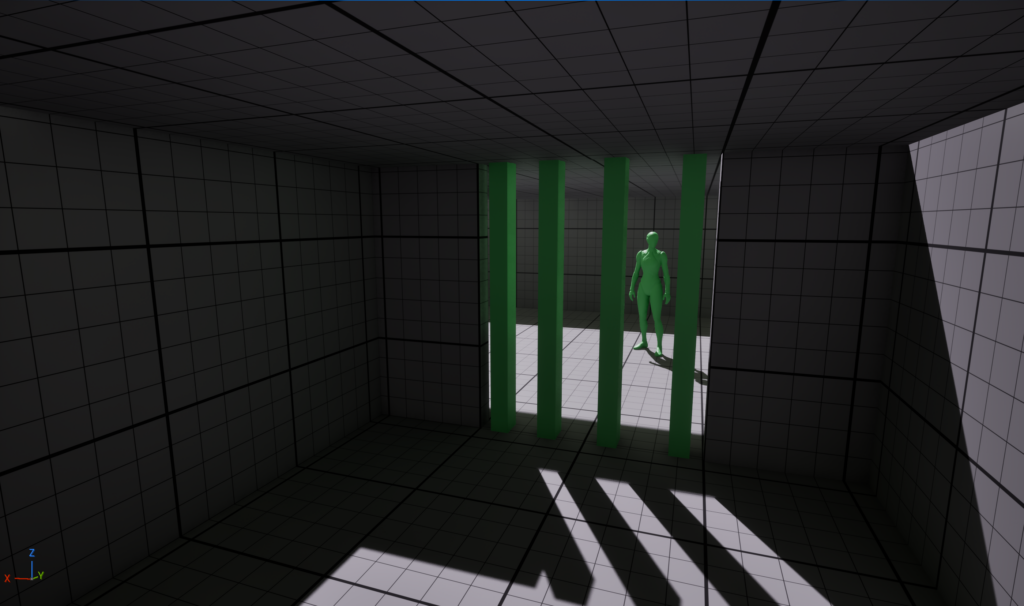
Gated NPC as narrative breadcrumb
Further along the exploration path, the player may discover a closed gate with an NPC locked behind it. A short exchange of dialogue hints at the whereabouts of a guard who holds the key to the cell. The encounter is entirely optional, but it plants a thread for players who are paying attention. Those who follow through and complete the quest will find the NPC later in the game’s main hub, reinforcing that curiosity and engagement with the world are consistently rewarded.
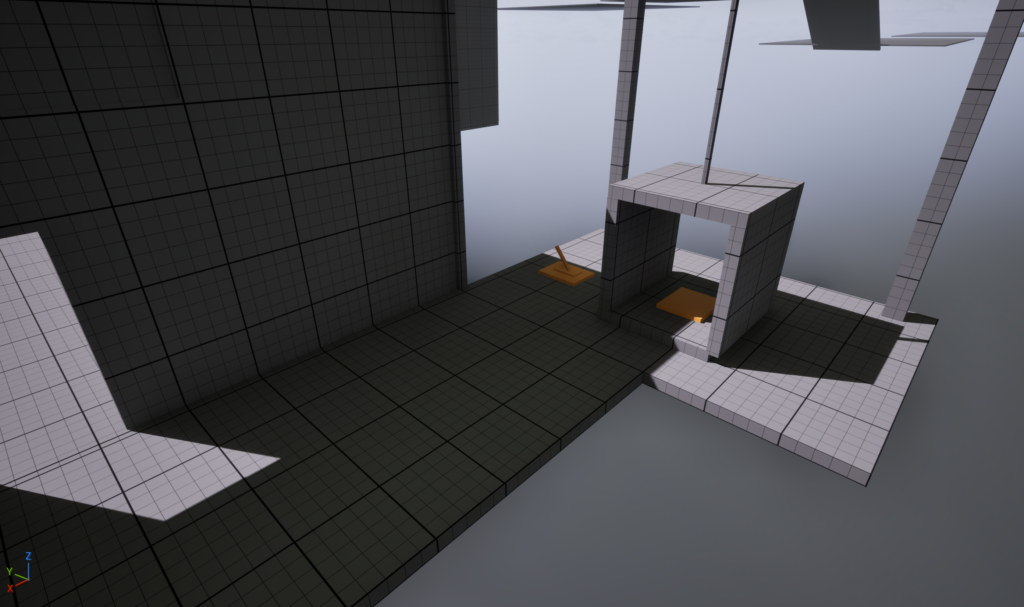
Shortcut loop back to the bonfire
As exploration continues, the player gains access to an elevator that connects back to the first bonfire near the opening room. This shortcut is positioned deliberately close to the level boss, ensuring that players who unlock it have a direct route back to the fight without retracing the entire level after a death. The elevator is placed to be hard to miss but not impossible to overlook. Careless players who push forward without activating it will face the full cost of that oversight on their next attempt.
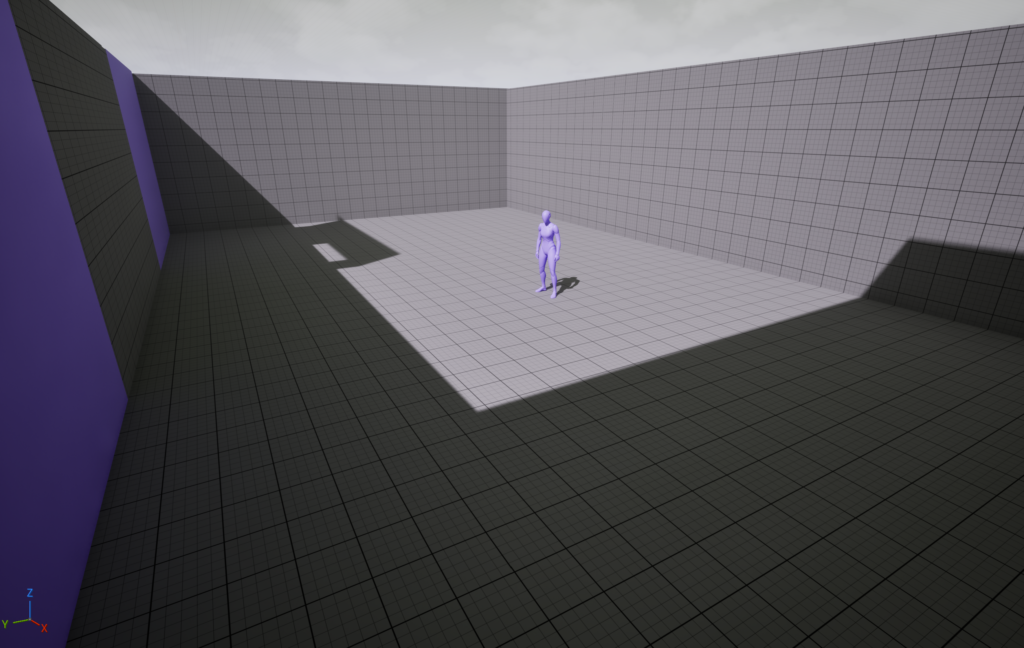
Boss arena and spatial stakes
Once the player passes through the fog gate, there is no retreat until the fight is won or lost. The arena is intentionally simple and open, providing ample space for both the player and the boss to move freely. Souls-like combat relies on careful observation of move sets and animation tells, and the arena needs to support that by removing spatial pressure. The focus here is entirely on the duel itself, with no environmental distractions competing for the player’s attention.
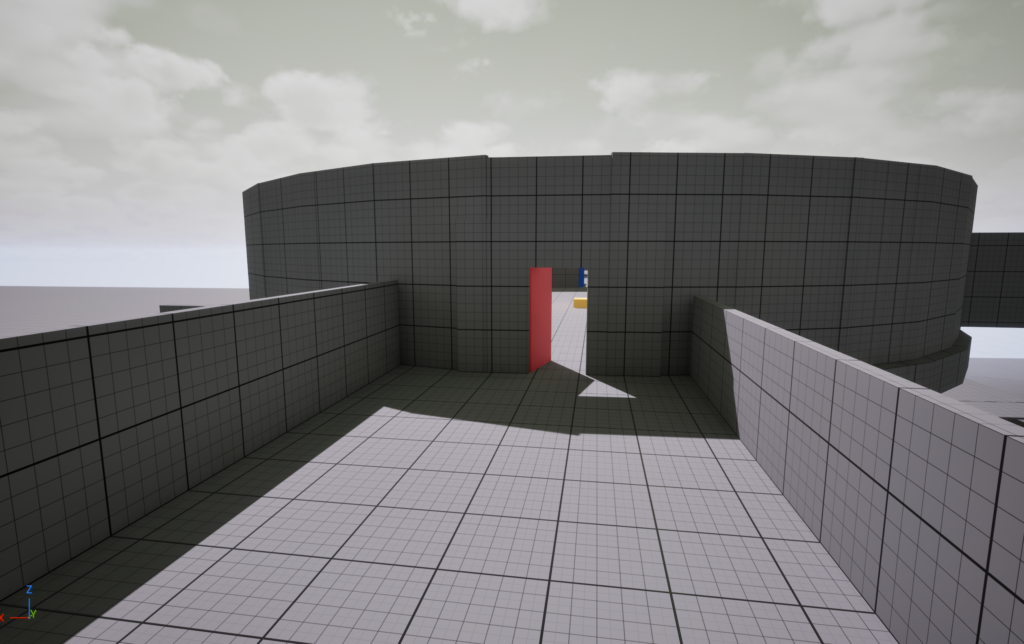
Post-boss reconnection to the opening area
After defeating the boss, the player emerges on the other side of the opening room and unlocks the red door, completing the shortcut loop. The bonfire is immediately accessible again, allowing them to save progress before moving forward. With the boss key now in hand, the player can open the purple door, the main gate that was locked from the very beginning. This marks the end of Hollow Keep and the transition toward the game’s central hub, closing the loop on the level’s interconnected structure.
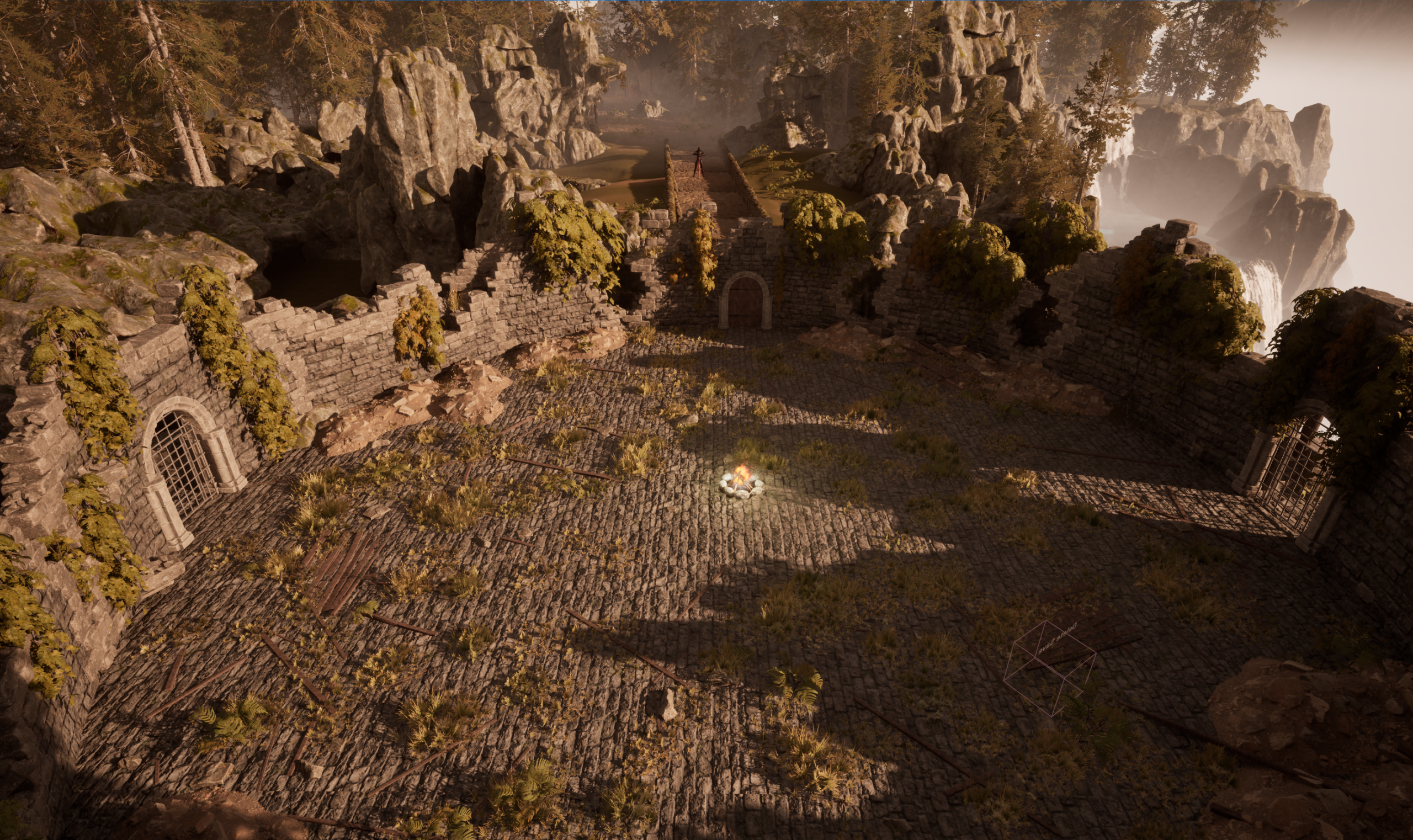
First room with art pass
This image shows the opening room with a full art pass applied. Beyond the now-unlocked boss key door, a new enemy type stands in the way of the path toward the hub. The player must deal with this encounter before progressing through a short stretch of forest that connects Hollow Keep to the game’s central hub area.
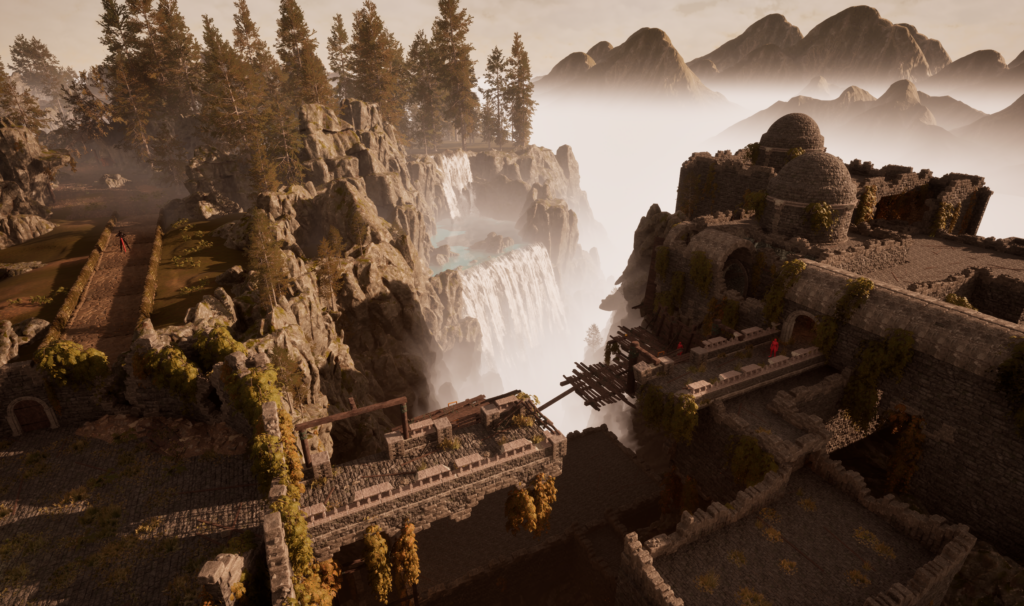
Castle exterior with environment detail
A view of the castle exterior after a full art pass has been applied. While the assets themselves are not my own, I was responsible for the full environment design and assembly of this space, positioning and composing each element, setting the lighting and atmospheric effects, and shaping the overall mood and visual tone. The goal was to reinforce the sense of scale and decay that defines Hollow Keep.
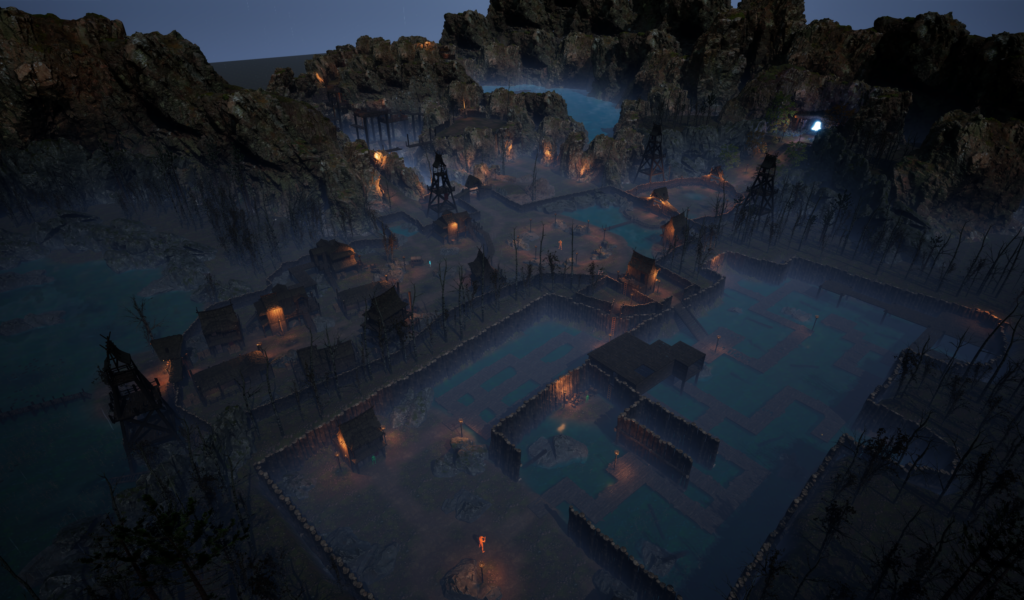
Second area overview and spatial layout
This image offers a top-down view of the game’s second area, currently in development. It presents a completely different set of design challenges compared to Hollow Keep, with new objectives, a distinct mood, and layouts that push the level design in a fresh direction. More detail on this area will follow as development progresses.