Over the course of nearly five years, I worked professionally on hyper-casual mobile games as a Game Designer. Across more than 30 projects, my core responsibilities included designing gameplay mechanics, defining core loops, shaping player progression, and ensuring each game delivered a strong and satisfying flow from the very first session. I frequently took on a leadership role within small teams of five to eight, managing production schedules, coordinating across disciplines, and keeping development on track from prototype to release. The projects showcased here represent a selection of the titles that best reflect my design thinking, creativity, and ability to ship polished, engaging games within tight production cycles.
Dungeon Loot Quest
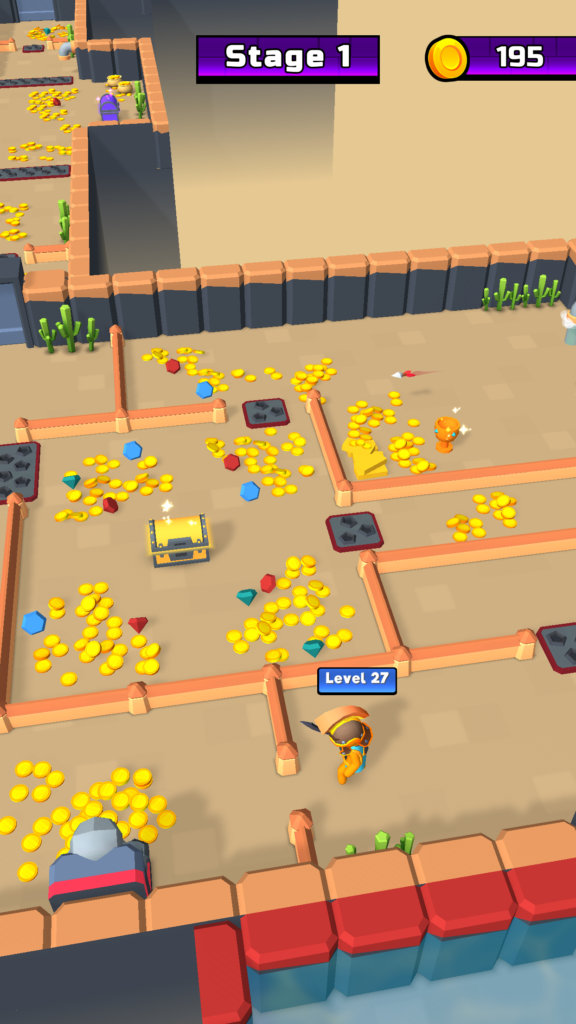
Dungeon Loot Escape is a hyper-casual dungeon crawler where the player navigates through rooms while outrunning rising water, collecting as much treasure as possible along the way. Earnings are spent on more powerful armour and weapons to upgrade the character and ultimately defeat the final boss.
My involvement on this project was broad. I created the dungeon level layouts, designed the loot economy and reward scaling, placed traps encounters throughout each floor, defined the weapon types and their distinct roles, and handled the overall design balancing across all systems. This was one of the more design-intensive projects I worked on at Full Fat because every system fed into every other: where enemies sat affected how much loot the player could safely grab, which affected how quickly they upgraded, which affected whether the boss felt fair. It reinforced that in even the simplest games, balancing isn’t about tuning individual numbers in isolation but it’s about understanding how every system interacts.
Dogfight
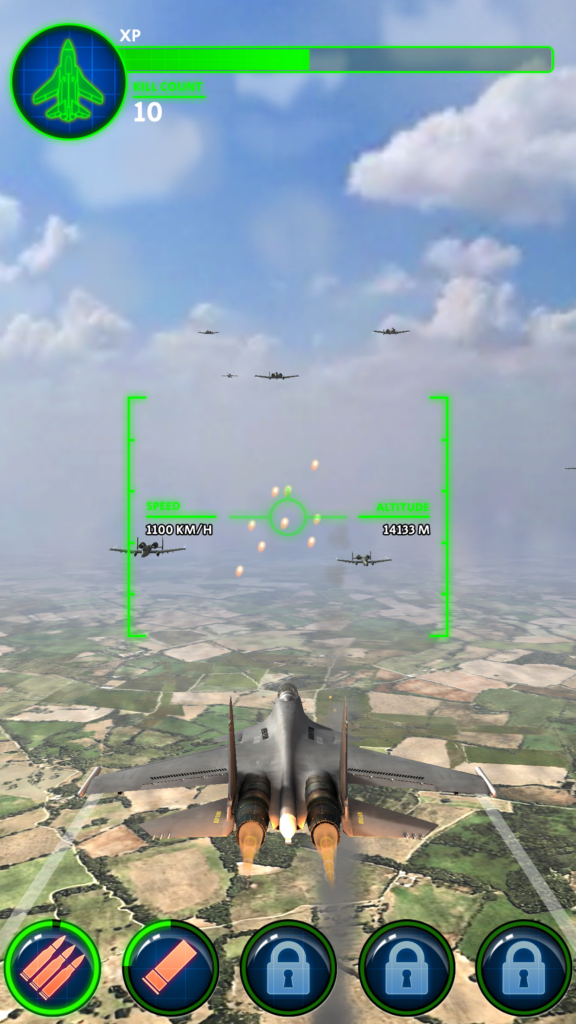
Dogfight is a hyper-casual aerial combat game where the player pilots a plane and takes down waves of enemy aircraft using five interchangeable weapons. The core loop revolves around chaining kills to earn experience, with each level up unlocking new perks and powers that expand the player’s tactical options.
The design challenge was balancing weapon variety against the simplicity that hyper-casual demands, each weapon needed to feel distinct and worth switching to without overcomplicating the moment-to-moment gameplay. This project sharpened my understanding of progression systems in short-session games and how to keep players engaged through a steady drip of meaningful rewards without breaking the pacing of a pick-up-and-play experience.
Demolition Crew
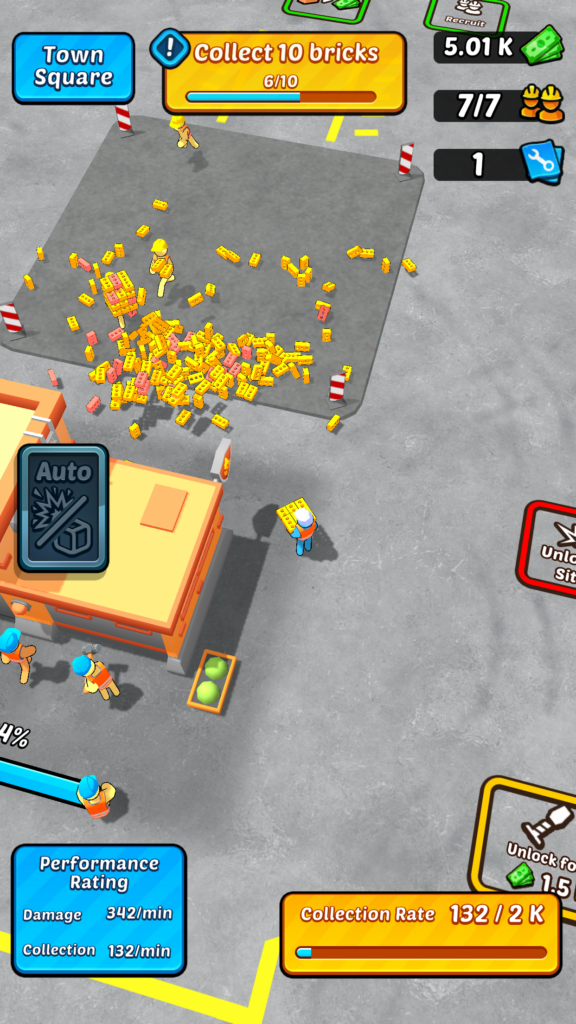
Demolition Crew is a hyper-casual destruction game where the player starts with a sledgehammer and smashes buildings to collect bricks, gradually growing their workforce and unlocking increasingly powerful tools like wrecking balls, flaming sawblades, and explosives.
My primary focus on this project was balancing and tweaking the in-game economy to ensure the loop felt consistently rewarding. Getting this right in a hyper-casual context is deceptively tricky as the player needs to feel progress after every session without burning through the upgrade curve too quickly and running out of motivation. This project deepened my understanding of how pacing and economy design directly affect retention, and how small adjustments to reward timing can make or break whether a player comes back for another round.
Pirate Quest
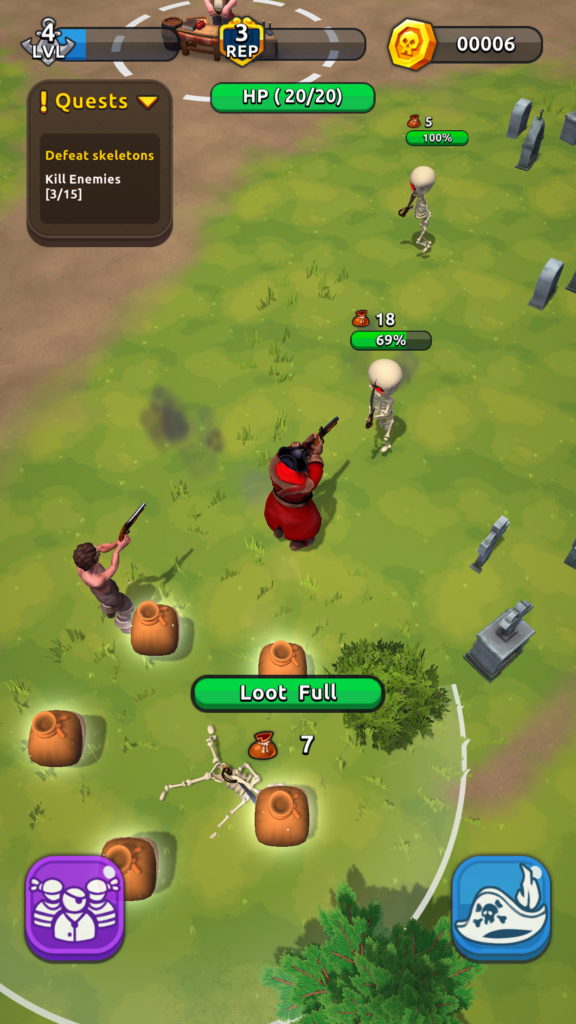
Pirate’s Quest is a hyper-casual adventure game where the player takes on the role of a pirate captain, exploring islands, completing quests, collecting loot, and recruiting crewmates to build a stronger crew on the path to becoming Pirate Lord.
My responsibilities on this project covered a wide range of design work: I designed the map layouts for each island, placed and tuned enemy encounters throughout the exploration spaces, shaped the game’s simple narrative thread to give the player a sense of purpose beyond loot collection, and handled weapon balancing to ensure each option felt viable without undermining the pick-up-and-play pacing. This project reinforced how much overlap there is between level design and encounter design in exploration-driven games, where you place enemies and how you tune their difficulty is inseparable from how the space itself is built. It also gave me hands-on experience with weapon balancing in a live environment, learning to read player data and adjust values to keep engagement without flattening the sense of progression.
Cat Samurai
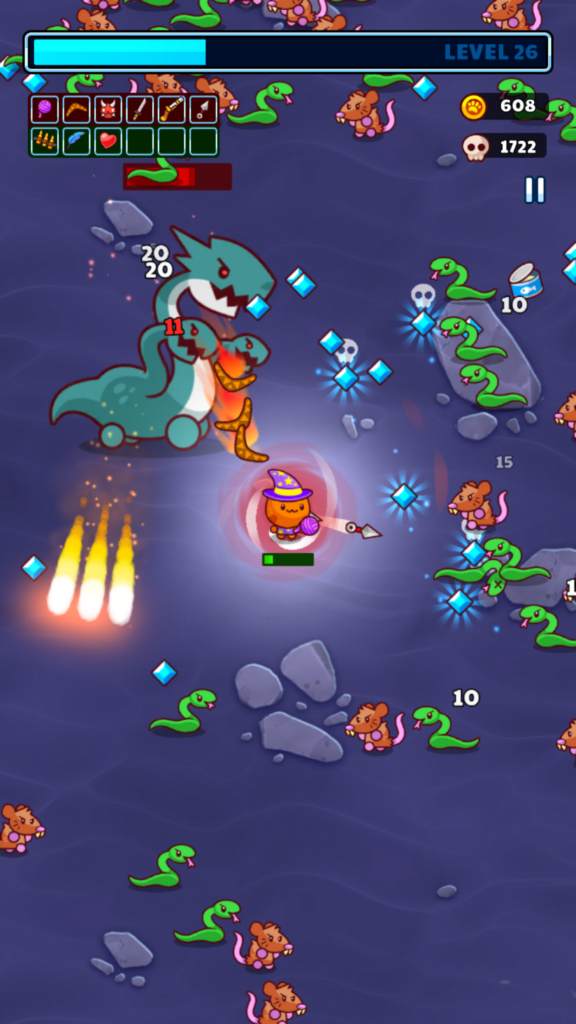
Cat Samurai is a hyper-casual action game where the player takes on the role of a feline warrior, slashing through waves of enemies, stocking up on weapons and items, and levelling up to unlock new samurai characters. Boss encounters cap off each wave, offering bigger rewards for players who survive the gauntlet.
My responsibilities on this project covered several interconnected areas: weapon and enemy balancing to ensure each wave felt fair and each weapon had a clear role, tuning spawn point placement and enemy numbers to control difficulty curves across waves, and providing visual direction notes to the art team to ensure enemy types and weapon effects read clearly during fast-paced combat. This project taught me how tightly combat balancing and visual clarity are connected, if the player can’t instantly read what an enemy is doing or what a weapon offers, no amount of number tuning will make the experience feel right.
Idle Drink Factory
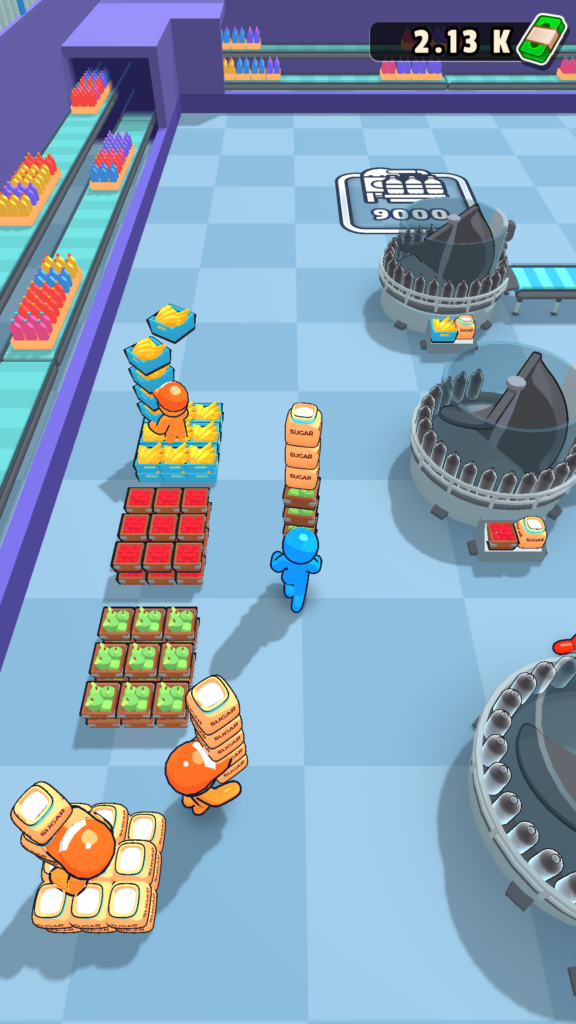
Idle Drink Factory is a hyper-casual idle simulation game where the player builds and runs a drinks production line, collecting ingredients, feeding them into machines, and selling the finished products to earn money. Earnings are reinvested into hiring staff with unique abilities and purchasing upgrades that enhance machines and boost output. The core loop, gather, produce, sell, upgrade, needed to feel seamless and self-reinforcing, where each cycle left the player visibly better off than the last and naturally motivated to start the next one.
My focus on this project was balancing the numerical economy, designing the layout of the production areas, and ensuring the whole process delivered visual satisfaction at every step. Idle games live and die on the feeling of watching things work such as ingredients moving through machines, drinks being produced, money ticking up. If the numbers are too slow the player loses interest, if they’re too fast the progression feels hollow. Getting that rhythm right while making sure each area of the factory felt spatially clear and visually rewarding was the core challenge, and it reinforced how much idle game design overlaps with environmental and UX thinking.
Hyper Car Tuning
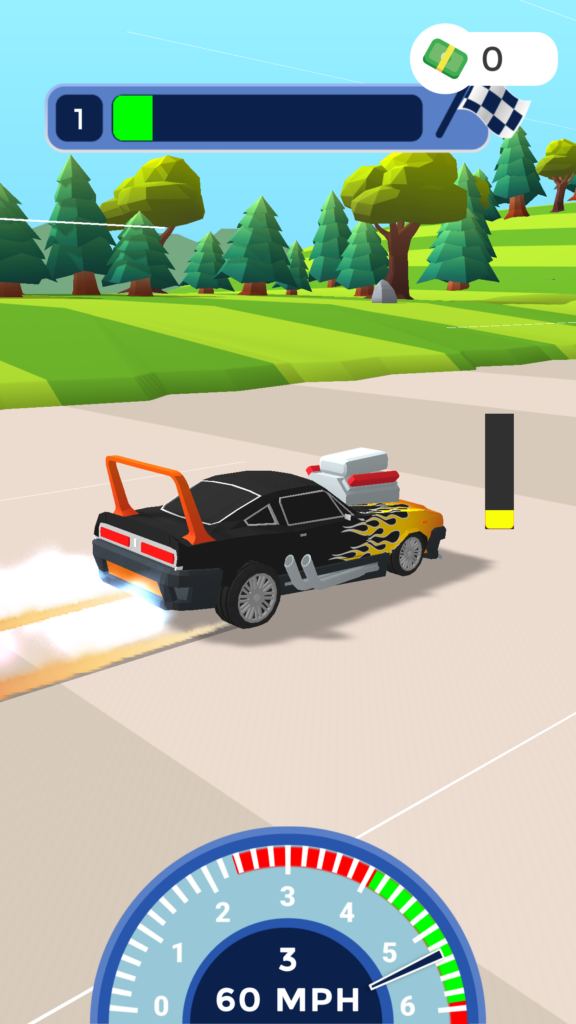
Hypercar Tuning is a hyper-casual racing game where the player assembles and powers up their car by dragging and dropping through multiplying gates, then races opponents by tapping to shift gears and using NOS boosts to overtake them. New, more powerful cars are unlocked as the player progresses.
My work on this project focused on designing the race environments and balancing the car performance numbers such as speed values, gear ratios, NOS impact, and the scaling between unlockable vehicles. The challenge was making sure each new car felt like a genuine step up without making earlier vehicles feel pointless, and ensuring the environments provided enough visual variety and spatial cues to make the racing feel dynamic despite the simplicity of the controls.