Fort Strongpeak is a stealth-action fort level inspired by the Assassin’s Creed franchise, where players must infiltrate a heavily guarded stronghold to rescue a hostage. With multiple entry points, ground and rooftop traversal, and branching paths that reward both stealth and aggression, every approach reshapes the mission’s outcome.
Developer(s): Solo Developer
Engine: Unity
Release: Portfolio Piece
Genre(s): 3rd Person Stealth RPG
Mode(s): Single Player
Zoning the fort for stealth and infiltration
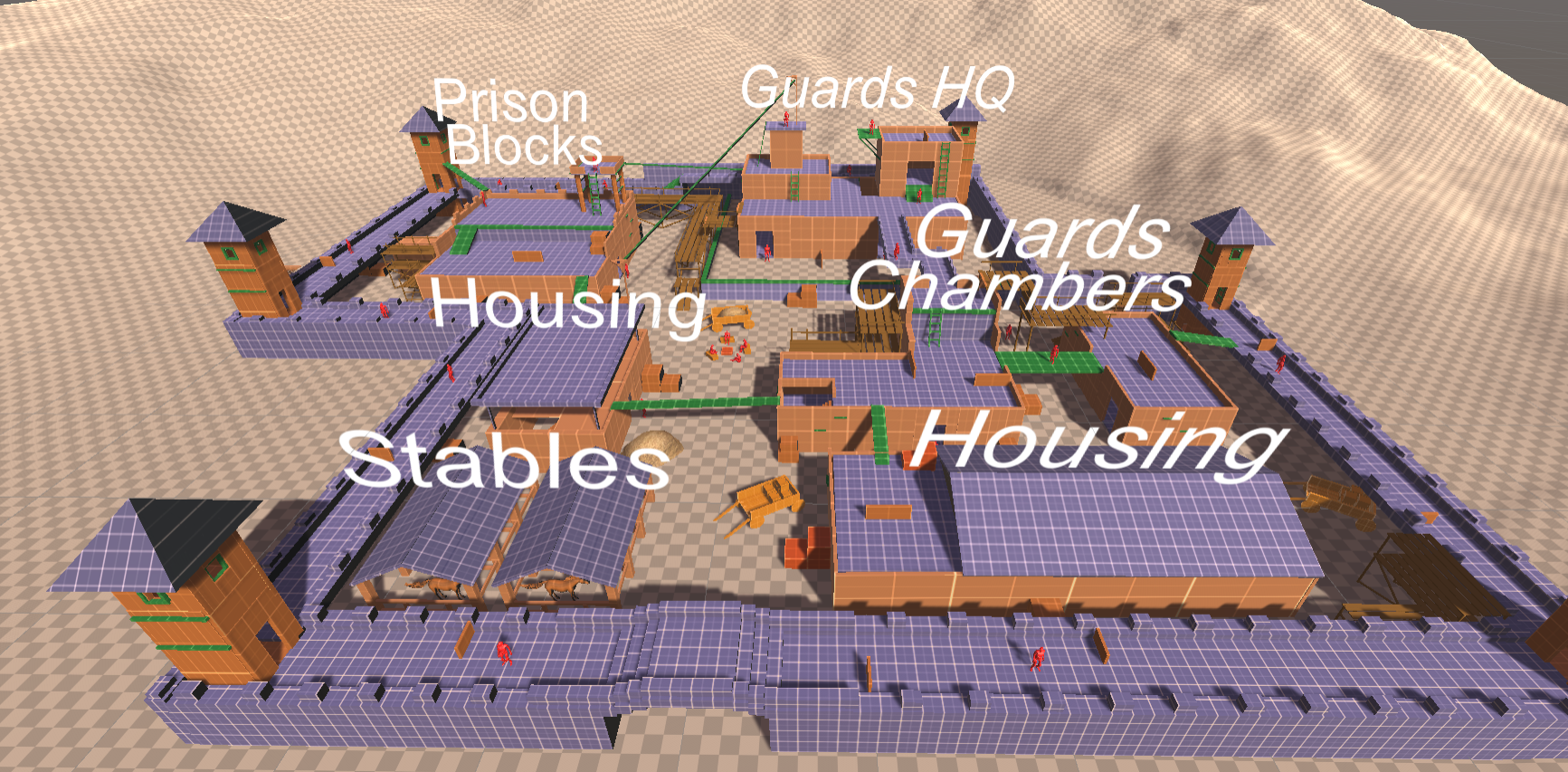
This image presents an annotated overview of the fort’s blockout, organised around distinct functional zones. The Stables and Housing anchor the lower section, the Guards Chambers and Guards HQ form the central command structure, and the Prison Blocks sit deeper inside the compound. This zoning mirrors how real fortifications were structured, giving the level believable internal logic while creating natural infiltration challenges. Approach routes, guard tower sightlines, and the relationship between civilian and military areas were all considered to support the stealth-driven gameplay inspired by Assassin’s Creed.
From paper to layout
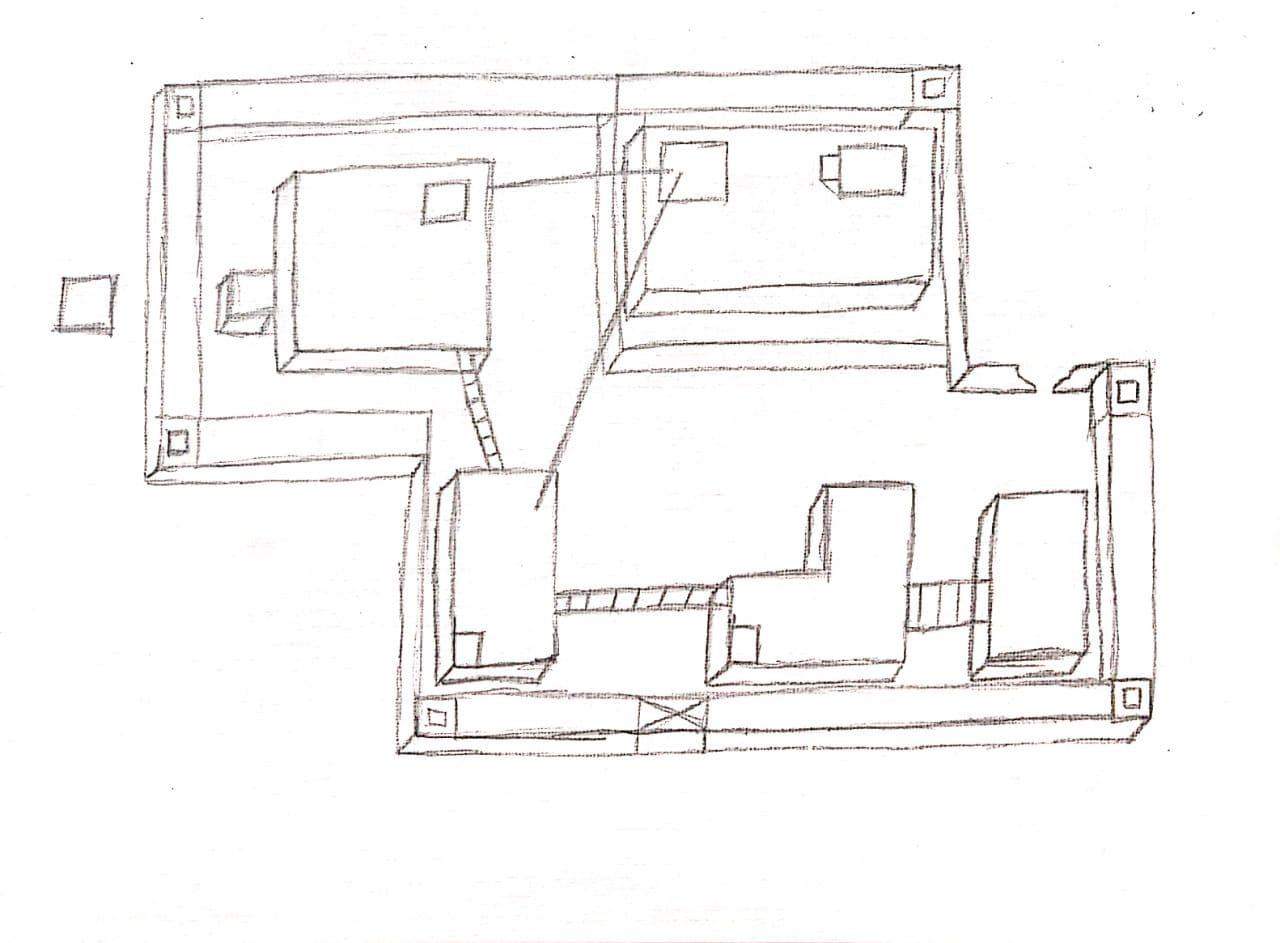
This is the very first 2D pen-and-paper draft of the fort, used to explore the overall footprint before any work was done in-engine. Sketching by hand at this stage allowed for quick iteration on the spatial relationships between districts, the placement of guard towers at the corners, and the connecting walls and walkways that link the two main compounds. Early decisions around the number of entry points, the separation between civilian and military zones, and the overall shape of the perimeter wall were all tested here first, where changes cost seconds rather than hours. Working in 2D kept the focus on layout, flow, and spatial logic without getting distracted by scale, materials, or visual detail. It also made it easier to identify potential sightline issues and dead zones before committing to a structure worth blocking out in 3D. This step is a core part of my design process, starting on paper forces clarity of intent before any engine work begins.
Mapping player flow and objectives
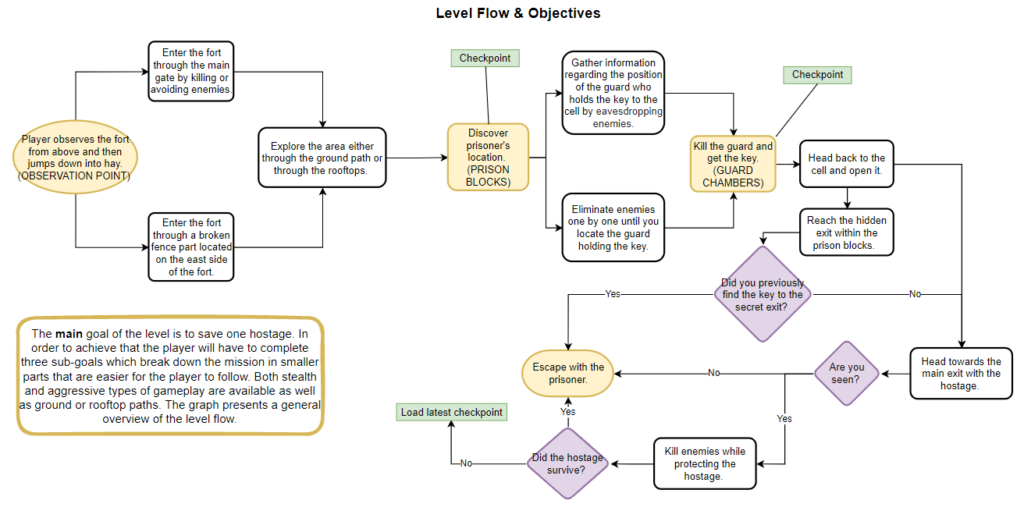
This flowchart breaks down the full level into its core objectives, decision points, and possible paths. The mission centres on rescuing a hostage, structured around three sub-goals: locating the prisoner, retrieving the key from a guard, and escaping the fort. Player choice is built into the flow at every stage, with multiple entry points, both ground and rooftop routes, and the option to play stealthily or aggressively. Diamond decision nodes mark branching moments such as whether the secret exit was found or whether the player is spotted during the escape. Mapping it out this way before blocking out in 3D ensured every path led somewhere meaningful and that failure states had clear consequences.
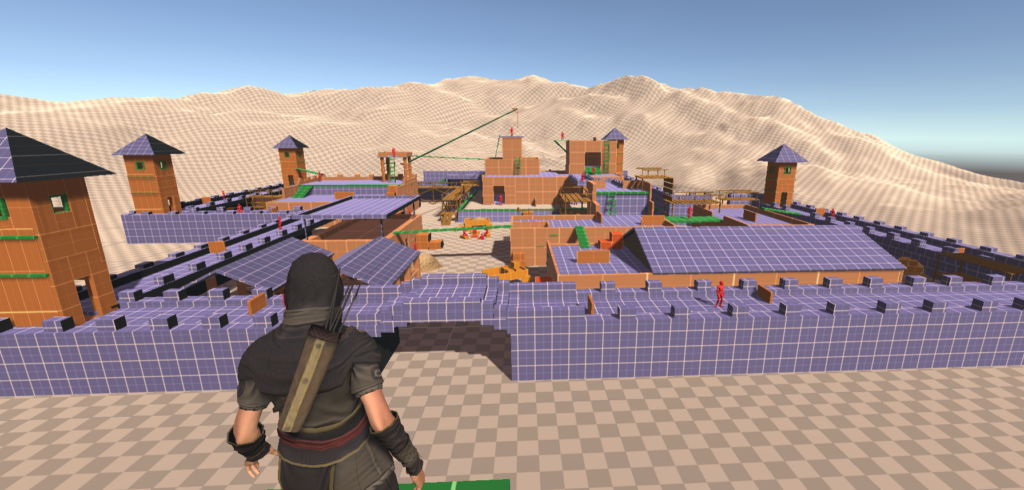
The player’s first view of the fort
This screenshot captures the player’s first-person experience at the start of the mission, standing on the observation point and looking out across the fort. From here, the entire compound is laid out for inspection: guard towers along the perimeter, patrols across the rooftops, ground-level enemies inside the walls, and the various buildings that make up each district. Framing the level this way at the start gives the player all the information they need to plan their approach without ever holding their hand. The composition draws the eye toward the centre of the fort, where the main objectives lie, while the surrounding details quietly communicate the scale of the challenge ahead.
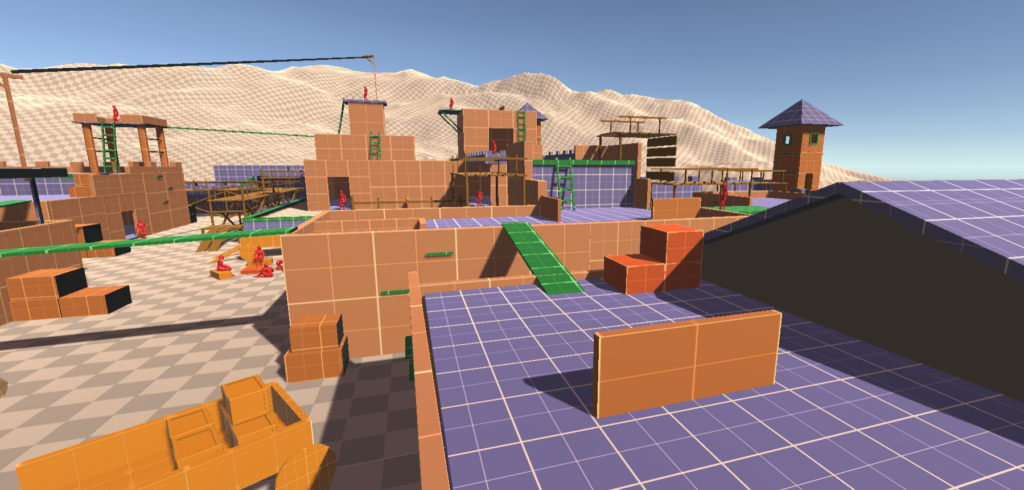
Verticality and rooftop traversal
This view inside the fort highlights the multi-level structure of the blockout, with rooftops, ladders, and walkways creating a fully traversable upper layer. Verticality was a core design priority, allowing players to bypass ground-level patrols entirely by moving across roofs, much like the Assassin’s Creed games that inspired the project. The placement of guards (in red) across both ground and elevated positions ensures that neither path is risk-free, forcing the player to constantly read sightlines and choose when to climb, drop, or commit to a route. Ladders and connecting beams act as bridges between buildings, giving the rooftop path its own internal logic rather than just being an alternative.
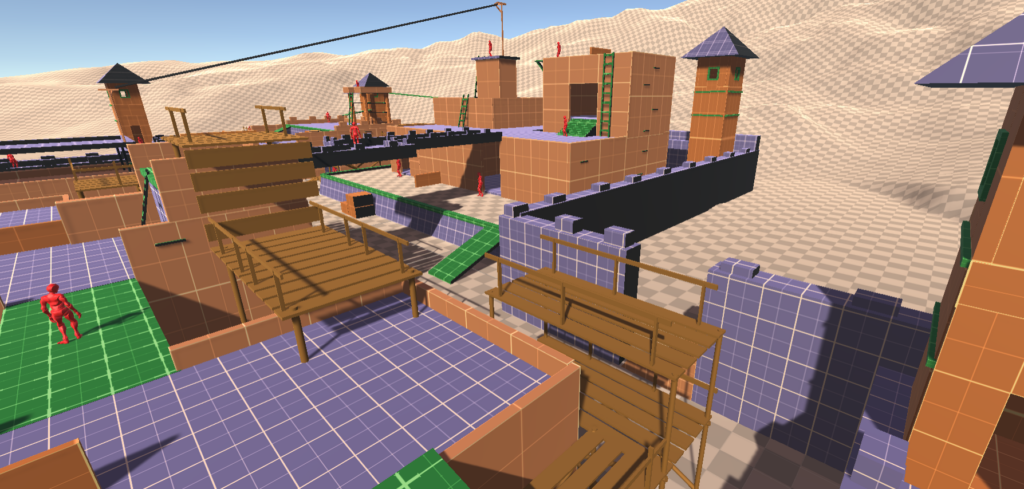
Connecting the rooftop network
This view focuses on the wooden walkways and platforms that link the fort’s buildings together at height. Rather than leaving the rooftop layer as isolated islands, these connections form a continuous traversal network that lets the player chain movement across the entire compound without touching the ground. The placement of guard towers along the perimeter forces the player to think carefully about timing and line of sight, while the elevated walkways themselves create natural pinch points where stealth takedowns or quick escapes become viable. The layered structure rewards players who study the environment and plan their route before committing.
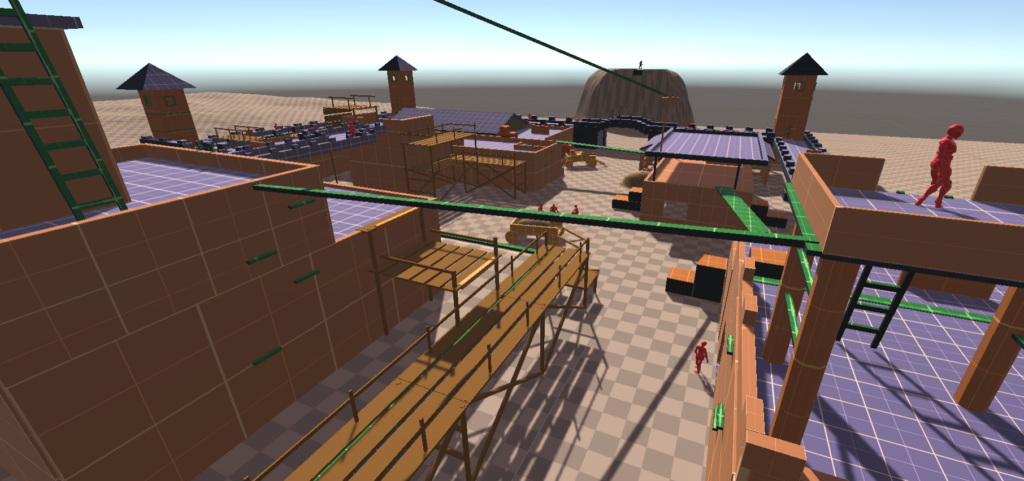
Sightlines and player perspective from above
This view places the player’s perspective on the rooftop network, looking out across the fort. From this elevated vantage point, the layout reveals its layered design intent: ground patrols and elevated guards are visible simultaneously, allowing players to scout enemy positions before committing to a route. The green markers along beams and ledges indicate climbable or interactable surfaces, providing visual language that communicates traversal possibilities at a glance. Designing the fort with this kind of readability from above ensures that the rooftop path always feels like an active strategic choice, not just a shortcut.
Eavesdropping moments and environmental storytelling
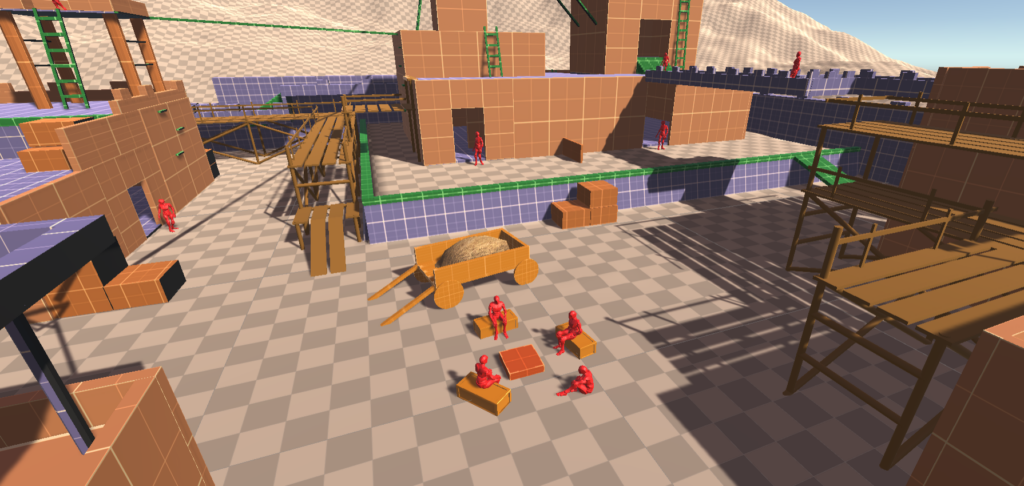
This image shows a ground-level encounter where a group of guards are gathered around a cart, seated and conversing. These are the moments designed to support the eavesdropping mechanic referenced in the flowchart, where the player can crouch nearby to overhear dialogue and gather information about the prisoner’s location or the key holder’s whereabouts. Placing these conversations in semi-open spaces, surrounded by cover like crates, walls, and elevated walkways, gives the player meaningful approach options. The scene also doubles as environmental storytelling: idle guards make the fort feel inhabited and routine-driven, reinforcing the idea that this is a working military outpost rather than a static obstacle course.
The observation point and player entry
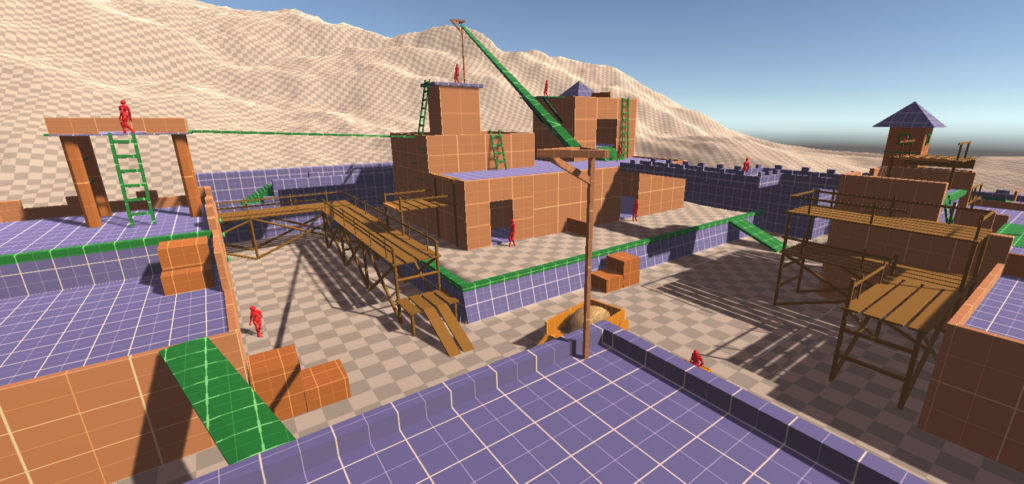
This is the observation point referenced in the level flowchart, the elevated platform on the left where the player begins the mission. From this vantage, the player can survey the entire fort, identify guard positions, and plan their approach before committing to a route. A bale of hay below the platform offers a safe drop-in point inspired directly by Assassin’s Creed, giving the player a clear and recognisable signal that the leap is intended. Starting the level this way reinforces the importance of observation and planning before action, setting the tone that this is a mission to be studied, not rushed.